Rachel Creed
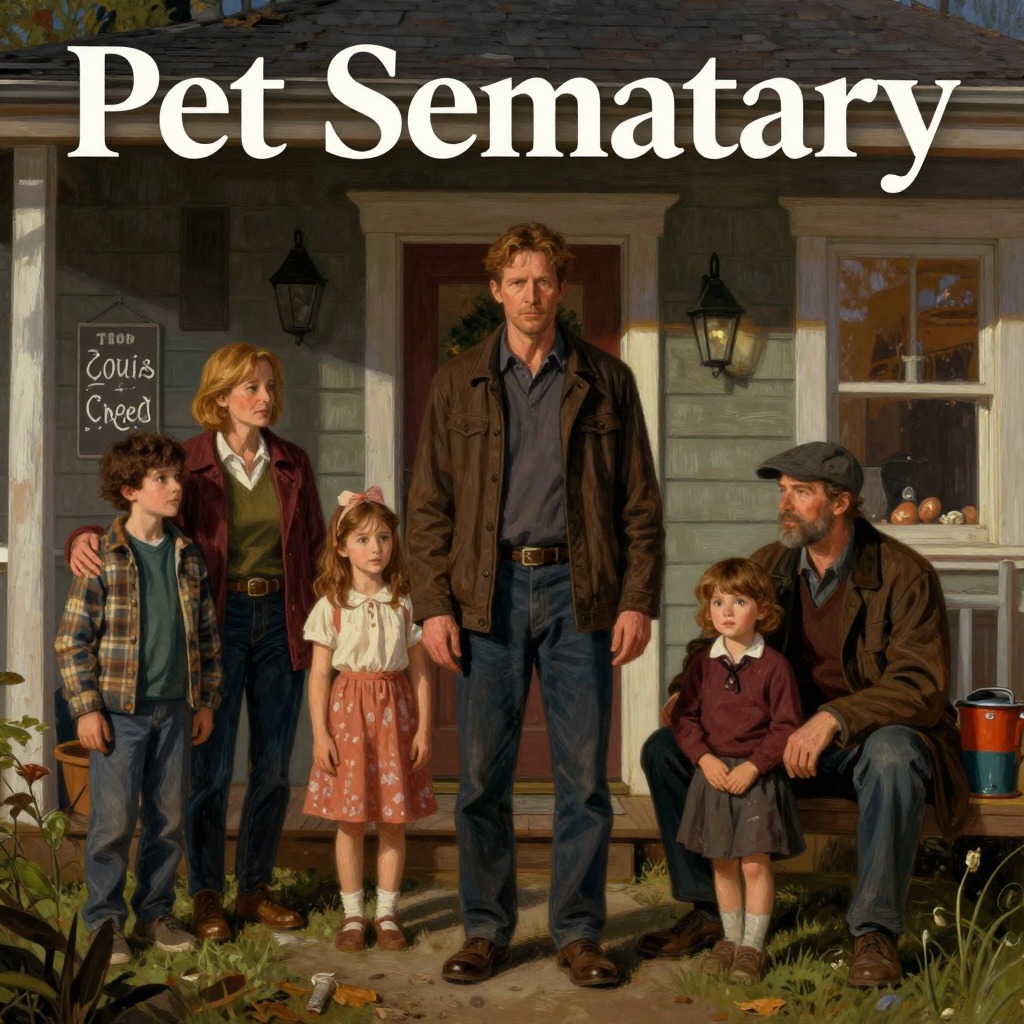
Rachel Creed is the wife of Dr. Louis Creed and the mother of Ellie and Gage. More than any other character in the novel, she is defined by a profound and paralyzing fear of death, a phobia that originates in a childhood trauma so severe it has shaped her entire adult personality. Her inability to confront the reality of mortality sets her in direct opposition to her husband's rationalism and makes her the family's most tragic figure when the ancient evil of the Micmac burying ground begins to exert its influence.
Identity and Background
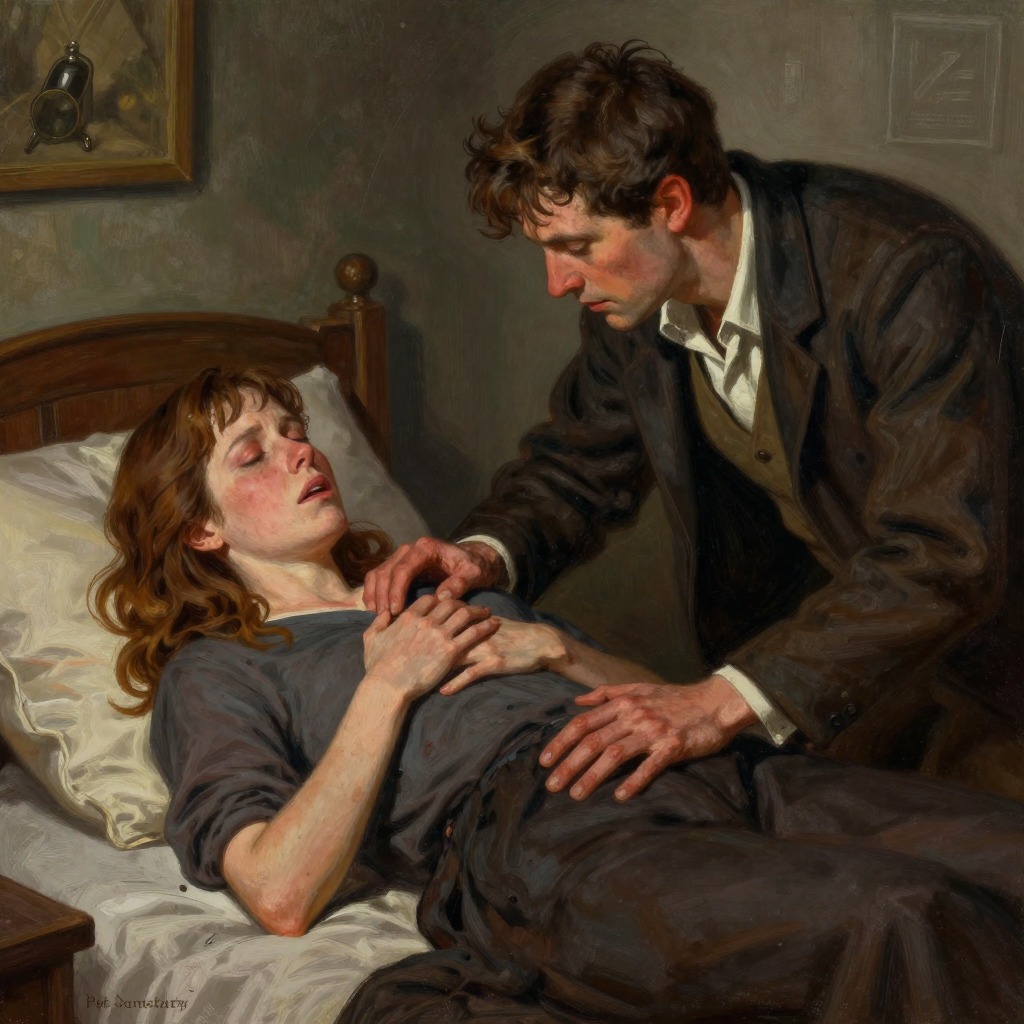
Rachel was born into the wealthy Goldman family of Lake Forest, Illinois. Her childhood was overshadowed by the prolonged, agonizing illness of her older sister, Zelda, who died of spinal meningitis in 1965. Rachel was only eight years old when she was left alone with her dying sister, who had become a twisted, hateful, and demanding figure. The experience was a nightmare of physical and emotional horror: Rachel was forced to feed and care for Zelda, who would deliberately wet the bed and whose body became grotesquely contorted by the disease. The memory of Zelda's death—the convulsions, the blackened face, the sound of her own blouse ripping as she tried to turn her sister over—left an indelible scar. For years afterward, Rachel was convinced that Zelda's ghost would return to exact revenge, and she suffered from psychosomatic back pain, believing she had contracted the same disease. This trauma instilled in her a deep-seated belief that death is not a natural end but a monstrous, dirty secret to be hidden from children at all costs.
Life and Plot Trajectory
Rachel's life in Ludlow, Maine, is initially marked by a cautious optimism as she settles into the new house and forms a friendship with Norma Crandall. However, her core fear is immediately triggered when her daughter, Ellie, visits the Pet Sematary and becomes distraught over the mortality of her cat, Church. Rachel's reaction is explosive and irrational; she forbids Ellie from ever going back and engages in a bitter argument with Louis, insisting that death is "nothing natural" and that they should shield their children from the subject entirely. This conflict reveals the fundamental rift in their marriage regarding how to cope with life's harshest realities. Her fear is further compounded by the death of Victor Pascow in Louis's infirmary, a name that later surfaces in her daughter's prophetic nightmares. The trajectory of her life is violently altered by the death of her son, Gage, who is run over by a truck on Route 15. The grief shatters her, and she becomes a hollow, disoriented figure, barely able to function. In this vulnerable state, she is easily manipulated by Louis, who sends her and Ellie to Chicago under the pretense of needing time to heal, while he secretly plans to resurrect Gage.
Key Actions and Objectives
Rachel's primary objective throughout the novel is to protect her family from the reality of death, a goal born from her own unresolved trauma. She attempts to control the narrative, forbidding discussions of mortality and trying to create a sanitized, safe environment. Her most significant action is her desperate, intuitive flight back to Ludlow after Ellie's nightmare reveals that Louis is in mortal danger. Despite her exhaustion and the supernatural forces that seem to conspire against her—a dead battery, a missed flight, a near-fatal car accident—she drives through the night from Chicago to Maine. This journey represents her only moment of active agency against the encroaching horror, a final, doomed attempt to save her husband from the consequences of his own grief and madness.
Relationships and Conflict
Rachel's relationship with Louis is the central emotional axis of the novel, but it is a relationship built on a foundational misunderstanding. Louis, as a doctor, sees death as a natural, biological process; Rachel sees it as a terrifying, personal violation. This conflict erupts over Ellie's reaction to the Pet Sematary, with Rachel accusing Louis of being cruel and insensitive. Her relationship with her own parents, Irwin and Dory Goldman, is also fraught. They are overprotective and guilt-ridden over the Zelda incident, and Irwin's open hostility toward Louis creates a constant source of tension. The most profound conflict, however, is internal. Rachel is haunted by the ghost of Zelda, who appears in her nightmares as a twisted, vengeful figure, a personification of her own guilt and fear. This internal battle leaves her psychologically fragile and unable to serve as a pillar of strength for her family when they need her most.
Change and Ending
Rachel's arc ends in absolute tragedy. She arrives at Jud Crandall's house at dawn, following the muddy footprints of her resurrected son. In the upstairs hallway, she is confronted not by Gage, but by a monstrous entity wearing his form. The creature, which briefly takes on the appearance of Zelda, stabs her repeatedly with a scalpel stolen from Louis's medical bag. Her death is brutal and senseless, a direct consequence of Louis's decision to tamper with the natural order. In the novel's final, horrifying scene, Rachel returns from the dead. She walks into the Creed house, places a cold hand on Louis's shoulder, and speaks his name. Her return is not a miracle but a curse, the final, grotesque fulfillment of the power of the Micmac burying ground. The woman who feared death above all else has become its most terrifying embodiment.
Narrative Role and Evaluation
Rachel Creed serves as the novel's emotional and thematic counterpoint to Louis. While Louis represents the hubris of rationalism and the refusal to accept loss, Rachel embodies the paralyzing, irrational fear of death that can cripple a life. Her trauma is the lens through which the novel explores the idea that sometimes, "dead is better." Her death is the ultimate proof of this maxim; the thing that returns is not her, but a hollow, malevolent shell. Rachel's fate is a stark warning against the folly of trying to undo the irreversible, and her final, chilling return is the novel's most potent symbol of the inescapable consequences of defying the natural order.